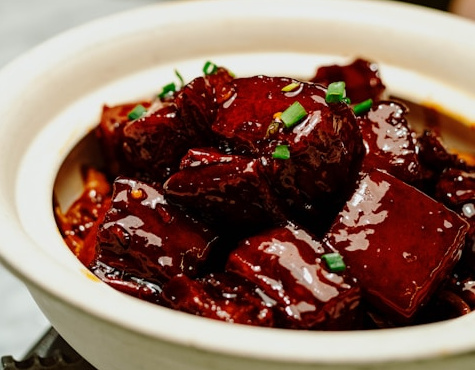
Eight places worth the trip
Tap through for the full guide to each place — what it is, what to actually do there, and how to get in without wasting a day of your trip.
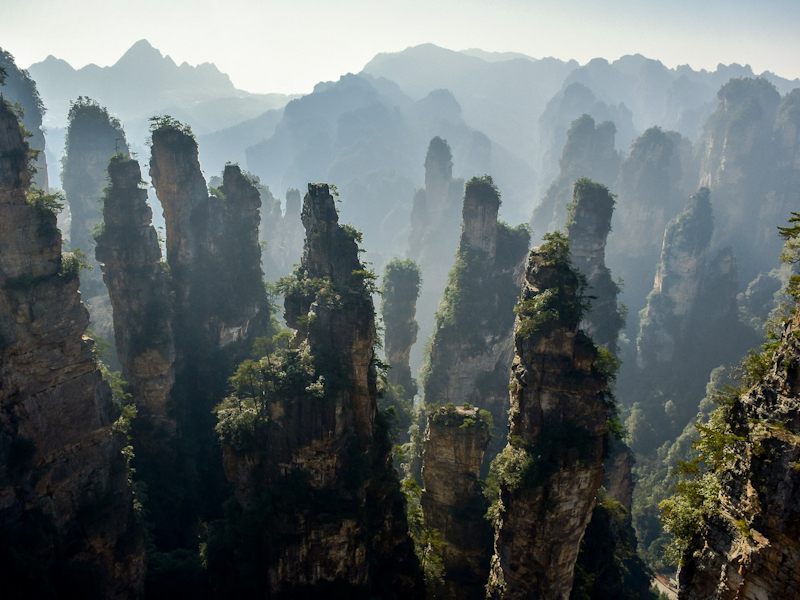
Zhangjiajie National Forest Park
Three thousand sandstone pillars rise straight out of the forest — the real-world model for the floating Hallelujah Mountains in Avatar.
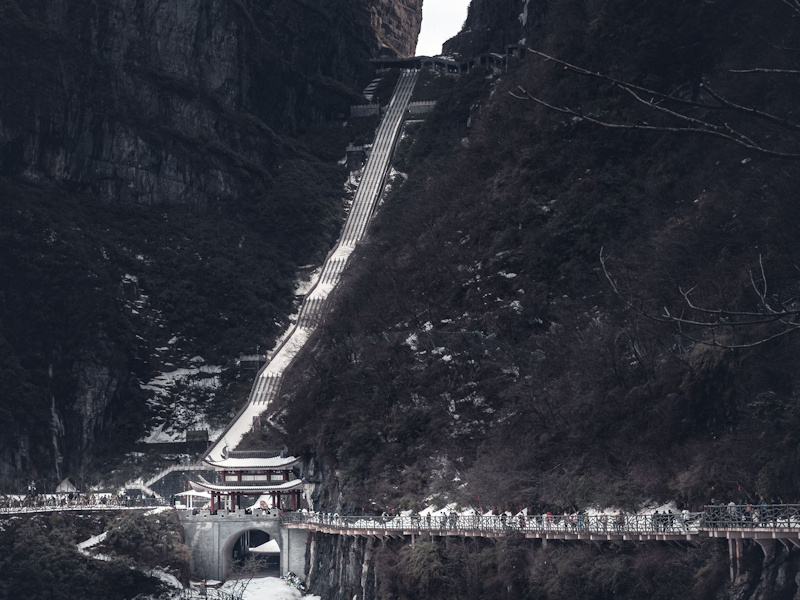
Tianmen Cave & the glass skywalk
A natural arch punched through the mountain's summit, reached by a long cable-car ride and 999 stone steps nicknamed the Stairway to Heaven.
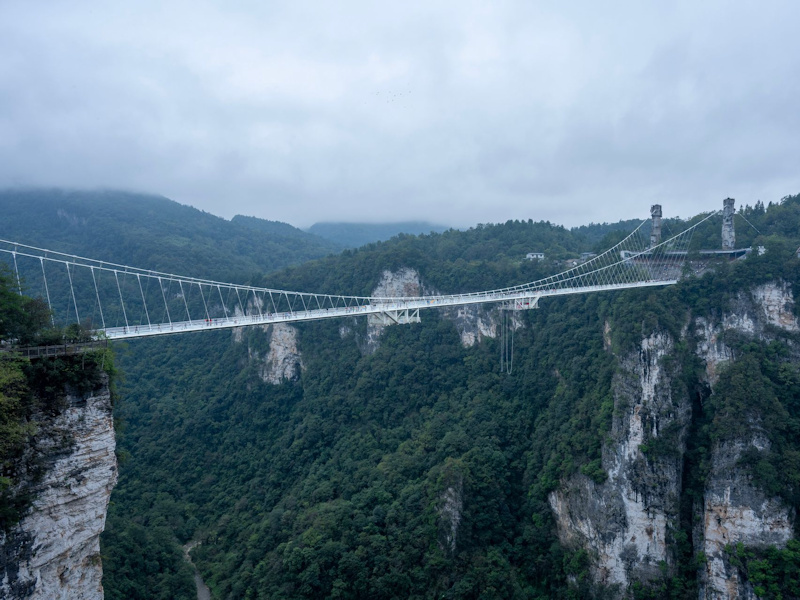
The glass-bottomed bridge
A vast glass walkway strung high above the canyon floor, with a bungee platform mounted underneath for anyone who thinks looking down wasn't enough.
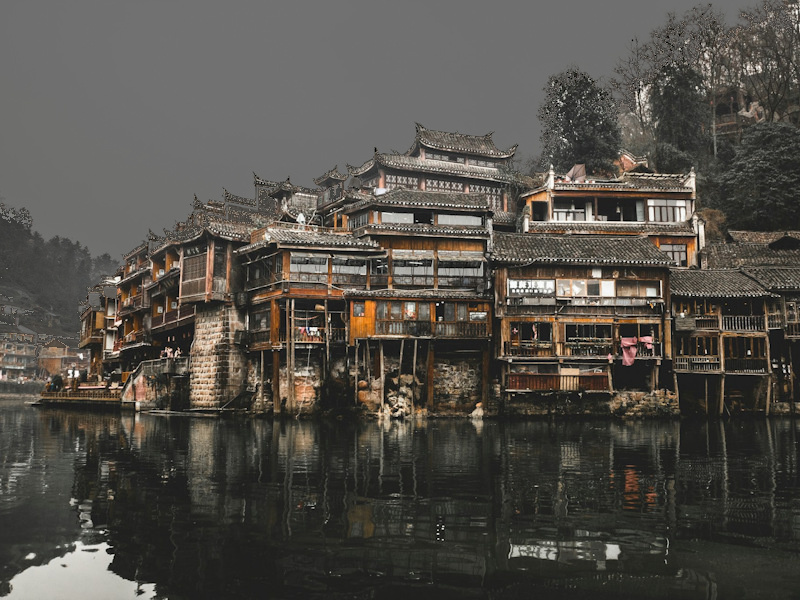
Fenghuang Ancient Town
Stilt houses lean out over the Tuo River in a town built during the Ming and Qing dynasties. Red lanterns take over after dark.
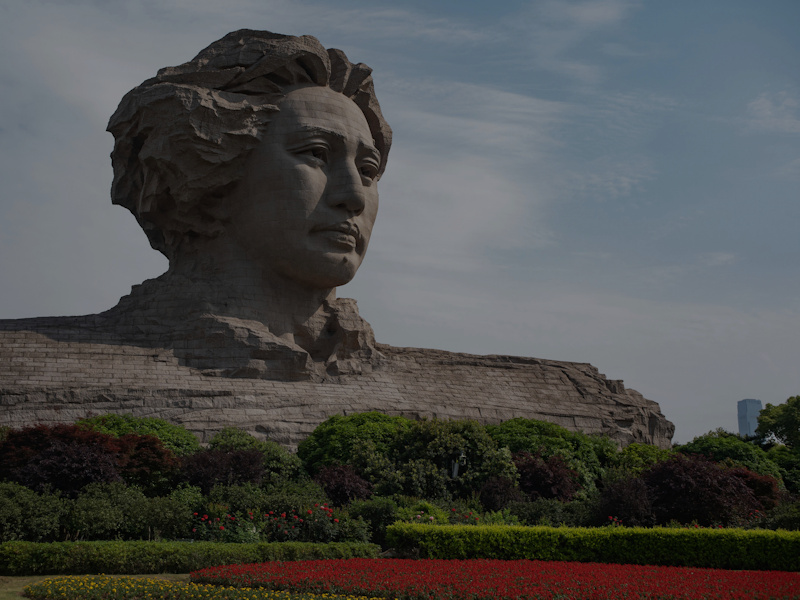
Changsha
A skyline of TV towers and glass, a giant carved head of the young Mao Zedong, and a night-market culture built around crawfish and skewers.
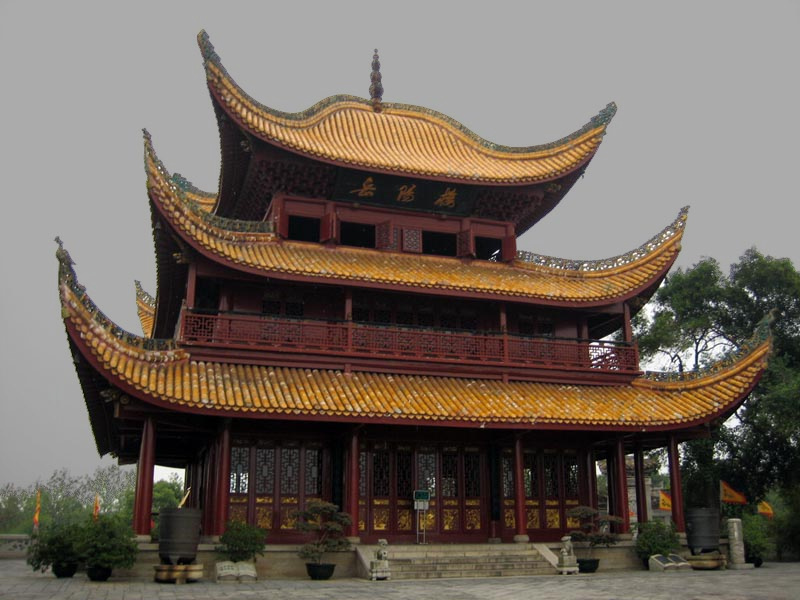
Dongting Lake
One of China's great freshwater lakes, ringed by wetlands, migratory birds, and Yueyang Tower — one of the "Three Great Towers of South China."
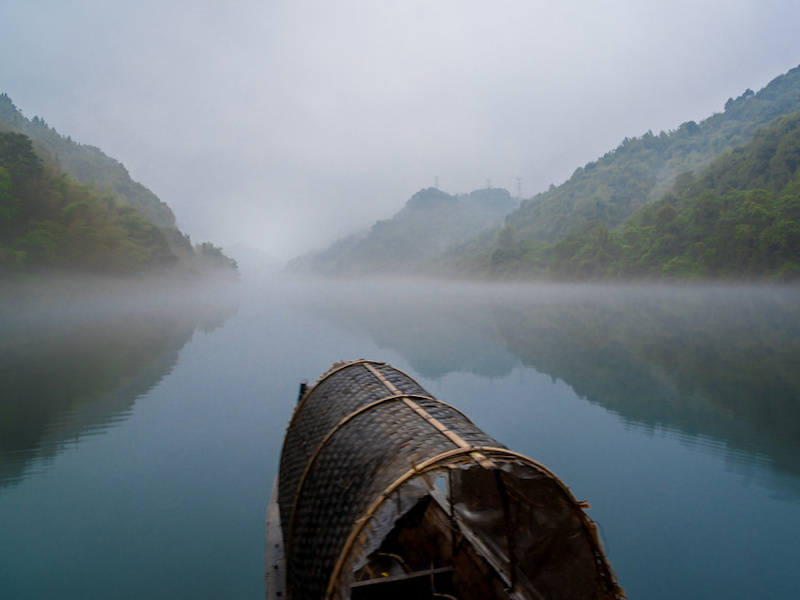
Chenzhou & Dongjiang Lake
A quieter corner of the province, built around a reservoir famous for near-daily fog, old-growth forest at Mangshan, and a scattering of hot springs.
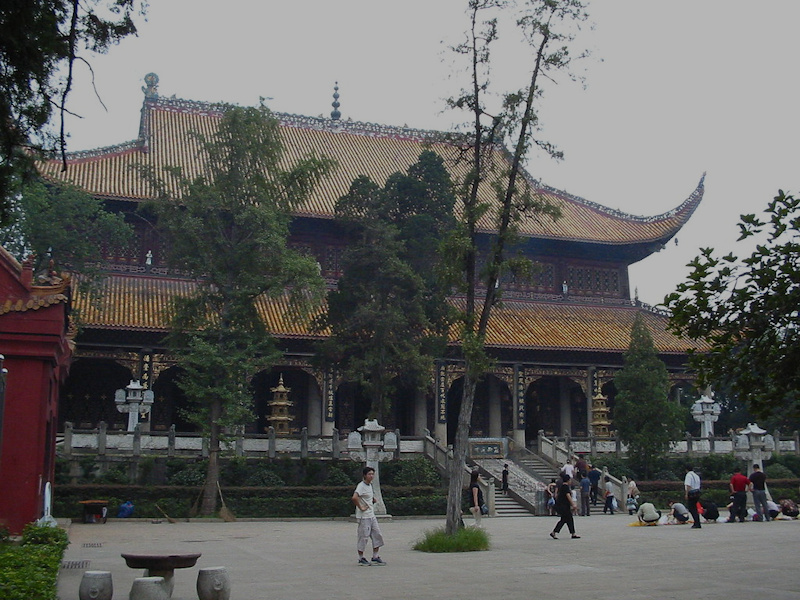
Shaoshan village & Mount Heng
Mao Zedong's home village, paired with one of China's five sacred mountains, thick with temples and incense smoke.